

Days Before Closing, a Condo Sale Collapsed. Here Is What Insurance Brokers Can Learn.
By J. David Rauch, CEO, ProTec Building Services
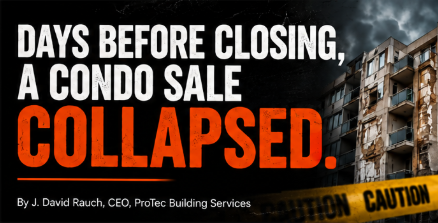
The board at Vilamoura, a Southern California condominium community, did not learn that its HOA had a financing eligibility problem during a board meeting or insurance renewal. It learned when a homeowner's sale was only days from closing. The buyer's conventional financing could not move forward because the condominium project had been identified as ineligible by the lender. What appeared to be one owner's failed transaction was suddenly a community-wide problem. If one buyer could not obtain conventional financing, other owners could face the same obstacle when they tried to sell or refinance. This HOA is not alone — HOAs nationally are facing the same problems: surging HOA fees and subsequent, surging foreclosures.
The Surprise No Board Wants
Following the 2021 collapse of Champlain Towers South, Fannie Mae and Freddie Mac strengthened their condominium project-review standards. Critical repairs, significant deferred maintenance, master property insurance,reserves and pending litigation can all affect whether loans secured by units in a condo project qualify for conventional secondary-market financing.
Although the industry often calls it a "blacklist," Fannie Mae's formal status is "Unavailable for Lending." Affected owners may still find cash buyers, portfolio lenders or nonconforming financing, but the buyer pool can shrink, and financing can become more expensive or restrictive.
According to HOA lawyer Stephen Marcus of Allcock & Marcus, there are an estimated 5,175 condominium and HOA projects nationwide that are on Fannie Mae's ineligibility list, including approximately 1,438 in Florida and 730 in California. See 10 states with most projects Blacklisted by Fannie Mae Here.
How Vilamoura Moved Forward
Vilamoura's eligibility issue involved major deck repairs that were already underway. The community manager and board learned that ineligibility did not have to be permanent. The key was demonstrating that the underlying condition was being corrected and documenting a credible path to completion.
The general contractor replacing the decks assembled information showing the repair scope and completion schedule. After updated documentation was submitted through the appropriate review channel, the project's eligibility status was restored.
The Condominium Conundrum
Vilamoura's story also reflects a broader governance challenge. With costs increasing across the board on HOAs and with insurance costs alone spiking over 20% in 2025, volunteer boards are often reluctant to increase necessary assessments on their neighbors. Some owners live on fixed incomes, and no one welcomes higher monthly costs. Boards may therefore postpone maintenance or select the least disruptive short-term option. This "condo conundrum" is common.
While sales of condos are down across the US and taking longer to sell due to rising HOA assessments, that doesn't stop buildings from aging when a board delays a decision. Water travels, corrosion expands, coatings fail and small repairs become larger, more expensive capital projects. Deferred work can increase claims, strain reserves and make insurance more difficult to obtain. Insurance difficulty can then contribute to financing ineligibility, which affects marketability and potentially property values. Preventive maintenance should be viewed as more than an operating expense. It is a key part of the association's insurance, financing and asset-preservation strategy.
A New Deadline Adds Urgency
The standards continue to evolve. Fannie Mae is increasing the minimum replacement-reserve allocation from 10% to 15% of annual budgeted assessment income for projects reviewed under the Full Review process, for loan applications dated on or after this date. According to the Wall Street Journal, "tighter federal mortgage rules will require many condo associations to budget more for future repairs."
The Lesson From a Rescued Transaction
Vilamoura regained eligibility because the underlying repair was being addressed and the work was documented. The lesson is not that every eligibility problem can be solved quickly — some projects face complicated insurance gaps, major structural work, litigation or severe reserve shortages. The lesson is that early action, a proactive building maintenance program, and credible maintenance documentation matter. A condominium association should not discover its vulnerability when a homeowner is days from closing.
In today's condominium market, the broker's value is no longer measured only by the policy delivered at renewal. It is also measured by the risks identified before they interrupt a refinance or a sale.
ABOUT THE AUTHOR
J. David Rauch is CEO of ProTec Building Services, which provides preventive-maintenance programs to more than 750 communities in Southern California and Nevada. ProTec has also prepared HOA maintenance manuals for more than 3,000 communities nationwide.